Dear reader, life is too short for crap books.

Wednesday, November 29, 2006

Go Buy Things

Everyone is already doing their Best of 2006 lists. I am waiting until mid-December, like a decent person would.

It is not too early, however, to do a holiday shopping guide, or to be more truthful, a list of things I want for myself. But surely something on this list will appeal to the book nerd in your life.

1. I Like You: Hospitality Under the Influence by Amy Sedaris
Graceful entertaining with Amy Sedaris? That sounds like everything I want to be a part of.

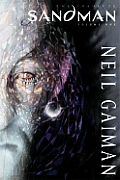
2. Absolute Sandman, Vol. 1 by Neil Gaiman
Pricey. But so wonderfully, wonderfully pretty.

3. The Crimson Petal and the White by Michael Faber
One of those books I'd like to own, but since I've already read it, can never justify buying when I have some precious Borders money to blow on shiny new hardbacks.

4. One Good Turn by Kate Atkinson
The waiting list at my library is long for this one. And despite the fact that I work there, I've never been like those patrons who, puma-like, stalk the online catalog holdings as if they were a troop of well-fed Boy Scouts. As a result, I'm something like 112 on the list and I don't think I can wait that long.

5. No One May Ever Have the Same Knowledge Again: Letters to Mount Wilson Observatory 1915-1935
There is a place in Los Angeles called The Museum of Jurassic Technology. It is the kind of museum where you might expect to see a narwhal skeleton or a man with a waxed mustache shouting, "For God's sake, man, cover the cage! There are women and children present!" Based on an exhibit here, this book contains letters from very sincere quacks about how they have uncovered the mysteries of the universe, and why the scientists must believe them.

The fate of the world may hang upon it.

Tuesday, November 28, 2006

Awesome Blog

Via Girls Read Comics (And They're Pissed), I found this, the blog-memoir of a woman who worked in the comics industry and barely got out intact.

The series of posts entitled "Goodbye to Comics" reveal a decent hunk of the comics industry to be as creepily hostile to women as you've always suspected.

Check it out - she's a great writer, and you will be so righteously pissed at those comic book guys who pretend to be feminists, but whose ideas about feminism are generally limited to ass-kicking babes who keep their mouths shut and do what they're told, like the one you see here.

Don't even get me started on the messed-up gender politics of Preacher.

Thursday, November 16, 2006

A Rake at the Gates of Hell

Hang out long enough in stores that sell Fantastic Four t-shirts and scale models of Hellboy's stone fist, and you'll likely hear the rallying cry of "Comics: Not Just For Kids Anymore!". What is usually meant by this is that there are works that cover serious themes in fairly "literary" ways; not everyone in a comic, in other words, has a cape, web-shooters, or adamantium claws. Books like Art Spiegelman's Maus or Craig Thompson's Blankets, two recurrent poster children for the "comics-are-high-art" camp, are often then held up as evidence of the aesthetic maturity of comics/comix/sequential art.

But there is another sense in which comics are not just for kids anymore: some parents might take it amiss if their kids read a series whose protagonist's defining moment involved botching an exorcism and condemning the soul of a little girl to an eternity of torment in Hell.

(He did try to pull her back out of the clutches of the damned and all, but he only managed to grab her arm. And it kind of...uh...came off.)

John Constantine: Hellblazer is a comic, but it's certainly not for little kids.* The title character, initially created by Alan Moore in the pages of Swamp Thing, is a working class mage, a kind of populist Merlin in a shabby trenchcoat with a penchant for lager and Silk Cuts by the carton, a hard-bitten cynic rooting through the ruins of Thatcher's England whose outlook on life would make Raymond Chandler blanch. He is not exactly a good person, but for fans of noir antiheros, he's an endlessly engaging character.**
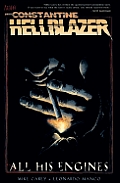

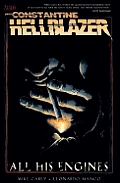
In Mike Carey and Leonardo Manco's All His Engines - a standalone graphic novel published for the benefit of non-readers who saw and maybe liked the Keanu Reeves film adaptation (which you and I will just pretend didn't happen) - Constantine finds himself traveling from London to Los Angeles investigating a mysterious illness that's leaving people in comas in both cities. Sleazy Hollywood demons, Aztec death gods who have emigrated north with their followers' grandkids, and Constantine's long-suffering driver/best friend/muscle Chas all come together in a plot that finds Constantine out of his element and right in it at the same time, double-dealing with the forces of evil while learning the hard way that L.A. ain't London.

All His Engines is a good introduction to the larger series; it requires very little in the way of knowledge of the series' mythology or backstory and provides a guide to the collected editions that Vertigo has culled from the series, which now numbers in the 200s. It also hits its marks in such a way as to suggest what the broader Constantine narrative holds, without simply rehashing the older, now classic stories.

Finally, the art is damn creepy, doing what prose often can't in the horror genre: squicking one out without becoming overwrought in the depiction of viscera and gore. I'm thinking here of the scene in which John is sucked into the chest of a demon who's made his body out of cancer cells. Gah.

If you like...
Stephen King and Ray Chandler in equal measure, or Firefly's Captain Mal in his darker moments, this book is for you.

---------------

*I do have to admit, though, that sometimes I daydream about sending copies of Hellblazer to the children of the parents who are trying to ban Harry Potter, just to show them what they should be worrying about.

**On the one hand, he once tricked the devil into drinking holy water (in the form of a pint of Guinness) to save the soul of a buddy who'd sold it for the world's greatest collection of intoxicating potables. On the other hand, while John is smart and John is crafty, John is also prone to getting out of trouble by asking you to hold his place in the Infernal Beatings line for a minute or two while he nips out for another pack of smokes.

Wednesday, November 15, 2006

For Plain Grain Shed

The Cooperative Children's Book Center at the University of Wisconsin-Madison has digitized portions of the original manuscript for Ellen Raskin's The Westing Game, aka the most awesome children's book ever written.

The exhibit also includes Raskin's working notes, which includes character clues, traits, and the Last Will and Testament of Samuel W. Westing. My day is so made.

(link via Oz and Ends)

Tuesday, November 14, 2006

Margaritaville

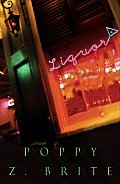
Liquor by Poppy Z. Brite

In The Value of X, Poppy Z. Brite shifted away from her usual horror turf, and introduced Rickey and G-Man, two New Orleans teenagers crazy in love with each other and with cooking.

In Liquor, the Lower Ninth Ward boys are all grown up, but still working as lowly line cooks in tourist traps and old man bars until they run into Lenny Duveteaux, a thinly veiled Emeril-type who wants to give them a shot. Rickey wants to start a restaurant where everything on the menu contains alcohol, a perfect fit for NoLa diners, and Lenny smells profit.

Improbable as it may be, watching Rickey and G-Man work up their menu, lease a space, and fool around in the test kitchen is addictive reading and a foodie's fantasy. Brite throws in a few side plots involving a gangland killing, a vengeful ex-boss, and a curmudgeon trying to stop the restaurant, but honestly, a few more pages spent the describing the prosciutto-wrapped figs marinated in Calvados would have been okay by me.

There is one big problem with Liquor, the problem being that Rickey and G-Man seem more like very good friends than lovers. Sure, they've been together for ten years and a life in the restaurant business doesn't exactly lend itself to quiet evenings snuggling on the sofa, but their relationship is virtually passionless. Even the Dewey subject heading in the book's library catalog record reads "Male Friendship - Fiction."

Brite has written two more books in this series, Prime and Soul Kitchen, the latter having been completed the night before Hurricane Katrina hit the Gulf Coast. I'm looking forward to catching up in time for the next installment, and hope that I pick up Prime to find that the restaurant has done really well, and that Rickey and G-Man saved up some money and run off to Cabo for a couple weeks to rediscover their love.

If you like...: novels about New Orleans, liquor, and food, this book is for you. Total no-brainer.

Monday, November 13, 2006

December Boys Got It Bad

Alternative Atlanta by Marshall Boswell

Atlanta, 1996. Gerald Brinkman, grad school drop-out and music columnist for Alternative Atlanta, the free weekly paper, is a 30-year-old man-child with a crappy apartment, too many CDs, and a job that is cooler in theory than in practice.

At first, this seems like another story about a white boy who wakes up one day to realize that he has nothing but credit card debt and a string of bitter ex-girlfriends to show for his misspent youth. And this is where, plot-wise, a lot of writers would stop.

But there's more to Gerald's life than that. There's his friend, Nora, who may or may not have married disasterously, and who Gerald may or may not be completely over. And there's the possibility of a job at a high profile music magazine. And then there's Gerald's father, Paul, who shows up in Atlanta announcing that he's sold all his possessions and plans to move in for good.

Believe it or not, Gerald's relationships become much more complicated from here, in ways that are both surprising and emotionally gripping. Alternative Atlanta is much better than most "shiftless 20-something" books because in addition this emotional depth, it has characters that are richly drawn*, natural, effervescent dialogue, and an actual, honest-to-god plot. Who could ask for more?

If you like...: Nick Hornby, Chuck Klosterman, or Curtis Sittenfeld, this book is for you. Also, Boswell's short story collection Trouble With Girls is a great read in the same vein.
__________________________________
* Though he only appears in three scenes, pot-smokin', bathrobe-wearin', sci-fi readin' grad student Jeff Flibula somehow became my third or fourth favorite character in the whole book.

Saturday, November 11, 2006

Friendly Advice

1. When one funnels the traffic from two Southern California freeways into a single lane and closes off all possible detour routes, how many hours until the research subjects lose all hope and purposefully drive through guardrails?

Under the guise of "road construction," social psychologists have undertaken this experiment between Barstow and Los Angeles on the 15 South. In the name of all that is holy, stay away from there.

2. Special Topics in Calamity Physics by Marisha Pessl is much, much less good than you have been led to believe. Its stylistic conceits do not work. Its characterizations are flat and tiresome. Worst of all, it is as annoyingly precocious as a 4-year-old who attends private kindergarten and calls her parents by their first names.

I feel that the reviewers are held hostage on this one, for it was determined that this book would be a big friggin' deal and that Marisha Pessl would be the next Zadie Smith since before it was published. Still, they're trying to warn us, even if it means resorting to code.

Janet Maslin's review in the New York Times begins:

"Marisha Pessl’s Special Topics in Calamity Physics is the most flashily erudite first novel since Jonathan Safran Foer’s Everything Is Illuminated."

Roughly, this translates to:

"Maisha Pessl's Special Topics in Calamity Physics is a fleshed-out creative writing assignment by an Ivy League-educated twenty-something who finished Infinite Jest, and understands IMPORTANT THINGS much better than you ever could."

I realize I am being way harsh. This is partly because it took me 2 hours to move 10 miles down the side of a mountain today. But it is mostly because I spent 2 months waiting on the library holds list for a book that was supposed to be good, and wanted to spare others my disappointment.

Recently, it was brought to my attention by my co-contributor that I am a "hater." I do not hate on things by nature. Moreover, I want to like young, innovative writers, but this plucky, perky, precocious thing is just not working for me. Can anyone out there recommend any "Bicentennial Baby" types who have not been contaminated by McSweeney's?