Dear reader, life is too short for crap books.

Wednesday, November 08, 2006

For Your Post-Election Hangover

Watching the election night results come in used to be like Superbowl Sunday to me. Then I moved to Calfornia, where the propositions are invariably more interesting than the candidates, yet somehow, everybody from the Insurance Commissioner to the Green Party State Assembly candidate seems vaguely awash in corruption or minor sleaze. I remember the days when I could go down to my polling place at the Madison Public Library and vote for Russ Feingold. Those were simpler times.

But for those of you who live in more politically interesting areas than I do, and need another month or so to come down from the effects of that alternately sweet and bitter drug called democracy, here is some reading to round out the end of your year.

I felt no need to reinvent the wheel on political fiction book lists, as there are many fine ones out there on this subject. Here are two of the best:

Nancy Pearl's "The Best in Political Fiction" for NPR
Political Fiction on Overbooked
And some of the most interesting-looking political nonfiction to come out this year:

The Bystander: John F. Kennedy and the Struggle for Black Equality by Nick Bryant
While something like 17,572 biographies of JFK were published in 2006, this one stands out from the pack by focusing on Kennedy's approach to civil rights, an approach that mainly entailed courting the black vote, then standing idly by.

Kingdom Coming: The Rise of Christian Nationalism by Michelle Goldberg
Between the excerpt from this and that feature on grunge fundamentalists, Salon has been chilling me to the bone of late.

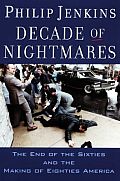
Decade of Nightmares: The End of the Sixties and the Making of Eighties America by Philip Jenkins
Everybody knows it - the 70s were a dark, ugly time. A look at how the hippies lost their idealism and became neo-cons terrified of everything from Communists to Satanic cults, this book seems wonderfully bleak and interesting.

Tempting Faith: An Inside Story of Political Seduction by David Kuo
Kuo came to work at Bush's controversial Office of Faith-Based and Community Initiatives, convinced he could use his Christian faith to make a difference in how politics was done. This did not turn out to be the case. I saw an interview with Kuo on the NewsHour with Jim Lehrer and he was so darn sincere both about his belief in God and in the U.S. government that I can't even imagine what must have happened to break him.

Conservatize Me: How I Tried to Become a Righty with the Help of Richard Nixon, Sean Hannity, Toby Keith, and Beef Jerky by John Moe
Somehow, I doubt this book is anything approaching subtle. Still, its premise has that appealing Morgan Spurlock 30 Days vibe, rather than that annoying Morgan Spurlock Don't Eat This Book vibe.

Tuesday, November 07, 2006

We Have Met the Spacemen, and They are Graduate Students

Hari Seldon is the Scotty of the social sciences: a science fiction character who embodies our particular brand of geek's idealized sense of self, the ultimate in wish fulfillment for the Chi-Square crowd. While Montgomery Scott taught the indoor children of the physics persuasion that sometimes the engineer saved the ship, got the girl, and beat the hell out of a bunch of Klingons who couldn't hold their liquor, with the Foundation series, Issac Asimov teaches us that we, the bastard children of Cassandra and Emil Durkheim, were right all along, and if everyone would listen to us, we could fix society.

And also: we would have spaceships and nuclear blasters.

Seldon is the inventor of "psychohistory" - a kind of demography/political sociology/ group psychology on an interplanetary scale that can predict the broad sweep of history with amazing accuracy. Crunching the numbers shows him that the Empire is about to collapse and galactic society is about to fall into a dark ages that will last 30,000 years. However, Seldon has also figured out how to shorten that interregnum to 1,000 years via subtly planning out the course of the future, and establishes a foundation of scholars on a tiny planet out in the galactic boonies to carry out "the Seldon Plan".*

Overall Seldon is more of a mythic figure than a protagonist per se and he may be a bit of a trickster, as it becomes more and more clear that he arguably set up a double-blind experiment where the outcome is the fate of humanity and the confederates are hard to tell from the dupes. The series follows several centuries of the Plan, and if anyone can be said to be the hero of the story arc it's the Seldon Foundation itself. Over the course of the series, several forces arise to challenge the Foundation, and not all of them were predicted by Seldon.

Of the books, my favorite are those that cover the early leaders of the Foundation, as they resort to ever-sneakier and more inventive diplomacy to take on interplanetary warlords, the remnants of the dying Empire, and internal political intrigue. Asimov also does a nice job keeping the characters engaging, which is very necessesary when one of the basic conceits of your story is that the mass actions of humanity render their individual choices and actions more or less irrelevant.**

Plus, at the end of each crisis the Foundation faces, a little Hari Seldon hologram pops up in their town hall and explains how he'd had all of this predicted with an alpha = .05, given that he set up the Foundation when, where, and how he did. The series eventually starts to exhibit diminishing returns, but I think it stays pretty solid all the way up to Foundation's Edge.

If you like...
States and Social Revolution by Theda Skocpol,***
Guns, Germs, and Steel or Collapse by Jared Diamond,****
those old Star Trek episodes where Kirk and the gang find some planet run by a computer, or an alien dressed up like a 19th century dandy, or the Romans or something,

These books are for you.
_____________________________________________

*In regards to the amazing predictive power and causal heft of Seldon's Plan, he's also kind of the Golden Fleece of sociology as well, but that's neither here nor there.
**The duality of structure, determinism vs. agency - does this sound familiar to anyone else?
*** Come to think of it, given the logic of the plot, admirers of Barrington Moore might like it more.
****This Jared is not, FYI, the Subway guy.

Monday, November 06, 2006

Murdered On the Interstate

Green River, Running Red: The Real Story of the Green River Killer, America's Deadliest Serial Murderer by Ann Rule

I'd never read a true crime book before, and I settled on this one for two reasons. First, I wanted it to be an Ann Rule book, as she is the undisputed queen of the genre. She got her start writing for True Detective magazine, then worked her way up to a book deal about a series of killings in the Pacific Northwest. These murders were eventually linked to Ted Bundy who was, at the time Rule was researching the book, her co-worker at a suicide hotline. Now, I doubt that God routinely goes around telling people to become true crime writers. However, I think that having America's skeeviest serial killer buy you doughnuts is sort of equivalent to a burning bush or an angel who shows up in your bedroom.

Bundy was not Rule's only up close and creepy encounter with a murderer. In Green River, Running Red, Rule discovers that the Green River Killer came to her book signings on a fairly regular basis. I guess that's the downside of being a famous true crime writer. Every psychopath on the block wants you to write a book about them.

When I remembered the Neko Case song "Deep Red Bells" on Blacklisted, narrowing down which Ann Rule book to read was easy. Between 1982 and 1984, the Green River Killer committed most of the 48 murders for which he would eventually be convicted, and Case was a teenager living in Tacoma, Washington. In a recent interview with the A.V. Club, Case said:
"I remember I cried really hard when he got caught. It was opening up a chapter in my life. I grew up while he was killing women, and on the news, they never talked about them like they were women. They just called them 'prostitutes.' Myself and other little girls in my neighborhood didn't make that distinction; we thought the Green River Killer was going to kill us. We were scared of him. We'd go to school with steak knives in our pockets and stuff."

I think back to when I was a little kid, and we all lived in terror of the blue van that would surely pull up at our neighborhood playground and lure us into the windowless back with promises of candy if we were not unfailingly vigilant and watchful. Then I think about what growing up would have been like if my neighborhood had been stalked by a real menace instead of an urban legend. I can't imagine how scary that would have been.

Having now finished a true crime book, I don't think I'll be reading another one any time soon. They make me feel bad inside. Still Green River, Running Red is a well-written book and Rule pays careful attention to the victims' lives, depicting them as women, not prostitutes, and not bodies dumped in the woods. This is sort of dubious praise to give a book, but I realize it's not for everyone.

I also realize that I haven't said much about the book itself, but if you want to read it, Rule's narrative style actually works well if you're not familiar with how a case turns out. And if you want to know more about the Green River Killer without reading a depressing, scary book, here's a link to his Wikipedia entry.

Wednesday, November 01, 2006

Chick Lit With a Body Count

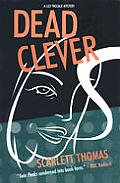
Dead Clever
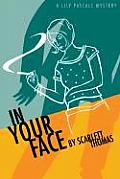
In Your Face by Scarlett Thomas

While Thomas would go on to write more ambitious books like The End of Mr. Y and PopCo, her first books were the three Lily Pascale mysteries (the third being Seaside, which I've not yet read), a quirkily charming series with a surprising amount of gore and depravity.

After dumping her vapid boyfriend and giving up on an unpromising acting career, Lily leaves London and moves back home with her mother to take a lecturing job at the local university.

Lily finds it a little odd that she's able to waltz into a position in the literature department with only a phone interview. Then she arrives at the school and finds that she's the third lecturer her classes have had in a term, and that a student on her roster recently showed up in the woods minus a head.

Then another of her students turns up dead behind a club - a drug overdose - except (yes, you guessed it) things don't add up. Lily's soon on the case.

While Dead Clever is a satisfying read, In Your Face is much better. Here, Lily receives a phone call from a former schoolmate with disturbing news. Jess, a freelance journalist, submits a piece on stalking to the women's tabloid, Smile! The day the magazine hits the newsstands, all three women featured in the article are savagely murdered in a spree killing. And when Lily gets to London, her friend is nowhere to be found.

Despite the gruesome crime, the Lily Pascale mysteries are of the cozy mystery variety. However, Thomas does some nice things with the conventions of the genre. She's excellent at setting up red herrings and surprise endings, and the crimes committed are bizarrely inventive. Thomas is a scarily smart and interesting writer, and her books just keep getting better - it's nifty to watch her hone her craft in these early works.

If you like your female sleuths a little younger and hipper than Agatha Raisin, or if you're looking for a chick lit heroine who is refreshingly uninterested in being fabulous, this book is for you.

Monday, October 30, 2006

Nature vs. Nurture: The Case of Courtney Love

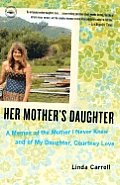
Her Mother's Daughter: A Memoir of the Mother I Never Knew and of My Daughter, Courtney Love by Linda Carroll

Sometimes you feel like reading Crime and Punishment, and other times, you stumble upon a tell-all memoir by Courtney Love's mother and clear your schedule for the day.

Over the years, Courtney Love has said some pretty awful things about her mother, so it's understandable that the woman would want to tell her side of the story. Carroll was married three times before she was 30, and dragged her children from San Francisco to Oregon to New Zealand, and back again, creating what was surely an unstable and weird environment for them. As one of her marriages crumbled, she took in a foster child; then left him with another family in New Zealand. When they left the United States, Courtney was left with one of Linda's friends. And so on, and so forth... hippie parenting at its most permissive and most horrifying.

But while the evidence against her parenting style is pretty damning, Carroll is an extremely persuasive writer and manages to come out of the story without seeming like an irresponsible flake. What's more, as a memoirist, she's very fair, compassionate, and forgiving. Despite the fact that Carroll's father molested her and her mother unfailing introduced her as "my adopted daughter, Linda," her depictions of them are, shockingly enough, filled with understanding and even love.

And yes, there are many instances that show little Courtney to be a selfish, manipulative, and deceitful bad seed; however, Carroll balances these moments with many examples of Love's creativity, intelligence, and generosity.

Carroll's search for her birth mother, who turns out to be acclaimed children's writer Paula Fox, is crammed into the book's last few pages, and the account of Carroll's life after the family returns to New Zealand is rushed. Still, it's an absorbing memoir about a woman you can grudgingly respect, even as you thank God that she wasn't your mother.

If you like...: memoirs of godawful childhood like The Liar's Club by Mary Karr and Augusten Buroughs Running With Scissors, or about women who rise above their youthful indiscretions like Beverly Donofrio's Riding in Cars With Boys, this book is for you.

Sunday, October 29, 2006

Hail to the King, Baby

So. Here we are. Mary has decided to make me an official contributer.

She is smart, and she is well-read, but sometimes her judgement is lacking.

All kidding aside, I'm unduly excited about hitching a ride on this train, and I've worked up an extensive and (hopefully) interesting list of books to post on for starters, ranging from "Accessible Academia" to comics to more traditional novels to the sci-fi that Mary won't read (Hello, Heinlein!). But for my inaugural post, I've decided to range a little far afield of the type of book usually featured on This Book is For You, because that is how I roll.

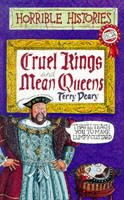
Mary and I brought back a number of things from our honeymoon, which we spent in the U.K.: nifty Celtic knot cufflinks, fond memories of the night we spent in Chelsea toasting Joey Ramone in the King's Head and Eight Bells, and - for all I know - a nasty case of Mad Cow Disease that will probably crop up in the middle of my dissertation defense. But the most precious keepsake of those magical two weeks in which the webmistress and I traipsed hither and yon over the stomping grounds of Shakespeare, Hardy, and Coleridge is, in fact, Horrible Histories: Cruel Kings and Mean Queens by Terry Deary, illustrated by Martin Brown.

Part of a much larger series, written in order to get kids interested in history by focusing on the bizarre and the gross, CK&MQ has been an endless source of pleasure in the Potts/McCoy household. It is, quite possible, the greatest "I have ten minutes to kill and cannot go without some form of stimulation" book in the history of publishing. Need something to read during the commercial breaks of Veronica Mars? Check out the section on royal sporting habits. (Henry VIII got in a game of tennis while Anne Boleyn got the axe, as it turns out.) Can't fall asleep? Amuse yourself by matching popular nicknames to monarchs in one of the quizzes sprinkled throughout the book. (John I? Soft-sword. Apparently, he stank at war.)

It's laid out as a series of very short, abundantly illustrated chapters about each monarch, covering their "Claim to Fame," factoids both "Funny" and "Fantastic," and then capped with a "Did you know?" There are also various tangents interspersed throughout, and of these the bit on royal medicine - or what I like to call "Adventures in Bloodletting" - is my hands-down favorite. The writing is a strange cross between UK tabloid-speak and a textbook as written by a member of Monty Python, only a Python past their prime. Groaners abound, but on the other hand you do you get to enjoy all that swotty British slang.

It is by no means literature, and I understand the series has sparked some hand-wringing and at least one lawsuit back across the pond. (Note: the Scots do not take kindly to having their haggis mocked.) That said, having done a little research on the series for this post, it is my new mission in life to find a copy of the Civil War book they published.

If you like:
The Cartoon History of the Universe by Larry Gonick
The Sun, or The News of the World
...this book is for you.

Thursday, October 26, 2006

Making Some Changes

I am pleased to announce that Brady will be joining in the posting around here.

He's tired of writing his blog, and I'd like to update this one more frequently than I am able to on my own. Everybody wins.

But you, dear reader, are the biggest winner of all. Because not only is my mister a shrewd observer of things literary, he also reads all kinds of things that I don't.

Can't wait to see what he decides to write about first.