Dear reader, life is too short for crap books.

Thursday, June 29, 2006

Shameless Self-Promotion

I swear, I won't make a habit of this, but I was kinda proud of the way this review turned out. Plus, if I hadn't already written about it somewhere else, it's exactly the kind of book I'd write about here. Such a good story, and nine kinds of fun.

In other news, I recently found myself in the unfortunate position of wanting to wear sandles to work but discovering that my toenail polish was horribly chipped. Then, I remembered an article I'd read in this month's Glamour about how to touch up your nails in two minutes while you're wearing your sandles. And it worked!

Let it be noted for the record that Glamour magazine impacted my life in a very real and immediate way, something that the novels of Philip Roth have not done even once.

Monday, June 26, 2006

The Real Lady Lazarus

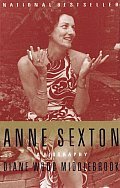
Anne Sexton: A Biography by Diane Wood Middlebrook*

Anne Sexton and Sylvia Plath once took a poetry class together, and were paired up at some point for a class exercise. In Plath's journals, she writes about this as "an honor," then proceeds to fret about needing a better haircut and to "get fixed up."

I love that Sexton could unleash Sylvia Plath's inner girly-girl.

The two are often compared, but for my money, Anne Sexton is the quintessential lady poet of the 20th century (with all the baggage, good and bad, that goes along with that). For starters, she was a chain-smoking, hard-drinking knock-out who gave sultry readings in a tight red dress. She was the poster child for The Feminine Mystique. And of course, she was suicidally crazy, carrying around a purseful of what she called her "kill me pills" (so I guess Courtney Love is a fan).

Middlebrook is an ideal biographer because she somehow managed to get all the relevant parties onboard for the project. Linda Gray Sexton, Anne's daughter and executor of her literary estate gave Middlebrook full access to everything. And when I say everything, I mean everything right down to her taped therapy sessions. On top of that, Middlebrook does a good job of balancing a thoughtful analysis of Sexton's deceptively accessible poetry with the more salacious aspects of her life. And despite the fact that Sexton was a self-absorbed, child-abusing, philandering confessional poet (shudders), she was also a sympathetic charmer, passionately devoted to her craft.

If I could choose any person, living or dead, with whom to get trashed in a hotel bar in the middle of the afternoon, it would totally be Anne Sexton.

If you ever went through a confessional poetry stage in college, if you're interested in the plight of pill-popping middle-class women in the 50s, or if you appreciate psychoanalysis in a retro-kitschy kind of way, this book is for you.
_______________________________
* I've seen many photographs of Anne Sexton wearing this halter dress. I covet this dress.
Thursday, June 22, 2006

In-Flight Entertainment

In about 7 hours I will be on my way to Pennsylvania to see the folks, the sibling, and her brood. I am incredibly excited, although not so much about the red eye flight with two layovers.

I once read that Connie Chung can fall asleep anywhere - like, in a warzone, in a helicopter, you name it. I cannot even fall asleep on the couch, much less an airplane. As a result, when I fly, I stock up big time. My reading for this trip includes:

A Very Long Engagement by Sebastien Japrisot
L.A. Confidential by James Ellroy
Anne Sexton: A Biography by Diane W. Middlebrook
Cotton Comes To Harlem by Chester Himes

And for when I need a break, I also have the new issues of Glamour, Vanity Fair, Harp, and Premiere.

A good book can make five hours in an airplane seem like an evening at the movies. One time, reading Little Women and another time reading Revenge by Stephen Fry (a modern retelling of The Count of Monte Cristo), I didn't even notice when the plane landed.

What are your favorite airplane books?

Sunday, June 18, 2006

Things Fall Apart

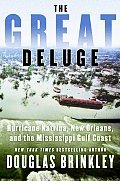
The Great Deluge: Hurricane Katrina, New Orleans, and the Mississippi Gulf Coast by Douglas Brinkley

"The blood-dimmed tide is loosed, and everywhere
The ceremony of innocence is drowned;
The best lack all conviction, while the worst
Are full of passionate intensity"

-"The Second Coming" -- W.B. Yeats

As Hurricane Katrina was gathering force in the Gulf Coast at the end of August 2005, my husband and I were glued to the news and worried sick. Worry turned into fear when it hit. Then fear turned into grief when the levees failed and New Orleans flooded.

And then over the next few days, worry, fear, and grief slowly turned into rage.

Watching the news that week, you got the stories, but they were fragmented and filled with confusion and misinformation. Brinkley's book has just enough distance, time-wise, from Hurricane Katrina to put all the facts in order and provide the kind of comprehensive coverage that you couldn't get from even the best news sources in the thick of things.

Unfortunately, it's even worse than you thought. Rapes, sniper fire, cops turned bad, bureaucracy at its inefficient and indifferent worst. There were many heroes to emerge from the storm, and Brinkley really gives them credit where it's due, especially the Coast Guard, the Louisiana Department of Fisheries and Wildlife, and the medical professionals who chose to stay behind with patients too ill to evacuate.

But then there are the villains. What Brinkley really does well is to document their crimes, separating the incompetent from the actively evil. Ole "heck of a job" Brownie may have been Katrina's scapegoat, but he barely holds a candle to the NOPD, Mayor Ray Nagin, Homeland Security Secretary Michael Chertoff (perhaps the biggest bad of them all), and the people of Gretna, Louisiana who prevented hurricane survivors from entering their city at gunpoint.

Get ready to scream, and then to sink into a deep, deep depression about the country you live in. That said, if you are an even semi-engaged resident of the United States, you ought to read this book.

Thursday, June 15, 2006

Jackie-O

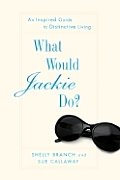
What Would Jackie Do?: An Inspired Guide to Distinctive Living by Shelly Branch and Sue Callaway

For once I agree with Publishers Weekly, who asks in their review of this book, "what would Jackie think about having her name attached to this...?" Still, I, for one, am glad this book is out there. Effortless etiquette is a skill that too few of us possess.

Plus, as style icons go, no celebrity or First Lady can touch her.

Take this, for example. Then think about every celebrity you've seen wearing oversized sunglasses in the past two years. While Jackie O looks classy, yet trendy, the same look on Nicole Richie just makes you want to reach for a can of Raid.

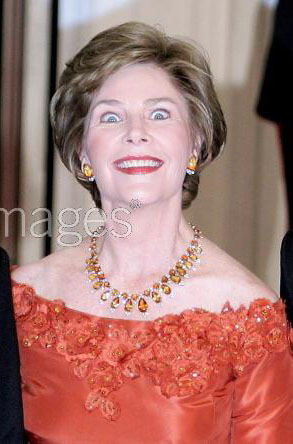
And Laura Bush might be the closest thing to a classy-looking First Lady we've had since 1963, but it doesn't change the fact that she has crazy eyes (and yes, if you do a Google image search for "laura bush crazy eyes" you get results).

If you like...: Go Fug Yourself, or quirkily amusing self-help books like Nerve's Guide to Sex Etiquette for Ladies and Gentleman (a very funny and useful book peppered with hilariously prim etiquette book-speak like "only the vulgarian would..."), this book is for you.

Sunday, June 11, 2006

Roman à Chef

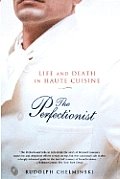
The Perfectionist: Life and Death in Haute Cuisine by Rudolph Chelminski

I used to think about going to culinary school, until I realized that being a chef requires not only that you love cooking, but also that you love the manic, testosterone-fueled world of restaurant kitchens, insane work hours, and the psychotic segment of the human race drawn to professional kitchen culture.

After two days working in the kitchen of the Peabody Hotel in Memphis, I learned that I don't love it. But I sure love reading about people who do.

The Perfectionist is ostensibly about the life and tragic death of master French chef Bernard Loiseau, who, plagued by debt, mental illness, and an obsessive fear of losing his Michelin stars, committed suicide in 2003. However, it's also about the grueling apprenticeship system through which French chefs were traditionally trained, the history of the Michelin Guide Rouge, and the transformation of French cuisine in the 20th century from haute to nouvelle to terroir.

Despite the difficulty of watching Loiseau's downward spiral for the last 100 pages, it's also the kind of book that makes you want to save up your money and spend a month eating and drinking your way through the French countryside with gluttonous abandon.

If you like...: Anthony Bourdain's books (the food ones, not the mystery ones) or The Making of a Chef: Mastering Heat at the Culinary Institute by Michael Ruhlman, this book is for you.

Thursday, June 08, 2006

Thanks Are in Order

To the apple of my eye, the Nick to my Nora, Brady, for his fact-filled and action-packed detective novel posts last week.

Thanks, sug.